Design to Support Greater Access to the World
Libraries are the heart of our communities — they welcome people of all walks of life to explore the world through books and storytelling. They offer access to important resources, not only to support learning, research, and discovery but also the fundamentals of everyday life. At Cushing Terrell, we understand all a community library must be, as well as the intricacies of special-purpose and academic libraries. It’s this in-depth knowledge we bring to every project we design to ensure your library is ideally suited for people’s needs.
Our Tenets of Library Design
Listen to the experts. We know you’re the experts in what your community or team will need from your library, so we’re here to listen and learn first and foremost. Establishing a firm understanding of your vision for today and tomorrow as well as the functionality required is the foundation of every successful project.
Prioritize human-centered design principles: Libraries are spaces for community. As such, we implement human-centered design aimed at enhancing social connections, reflecting the surrounding community, and celebrating culture. One of our number one questions: How will this space support the people who pass through its doors?
Ensure ideal form and function: Libraries often have a multitude of functions for various groups of people. To ascertain how to make everything fit and achieve the ideal form and function, we provide industry-specific expertise and analysis to create multi-use spaces that are functional and adaptable for differing needs.


Community Libraries
Community libraries are important resources that support life-long learning, encourage curiosity, nurture discovery, and facilitate knowledge sharing across generations — from the smallest humans just discovering the magic of storytelling to bibliophiles in their senior years.
Community libraries often serve many purposes, thus they need a variety of spaces that work in harmony with each other. This can include spaces designed to support different age groups, technologically enhanced spaces to support work and research, gathering spaces for knowledge sharing and workshops, and more. Through flexible, adaptable design and space variety, our team aims to design libraries that will stay relevant.
It’s just as important to us that everyone feels welcome in the spaces we design, which means designing buildings that are fully accessible and accommodating for anyone who engages with them.
Academic Libraries
From primary school to post-secondary education, academic libraries serve as the backdrop for learning, study, research, and exploration.
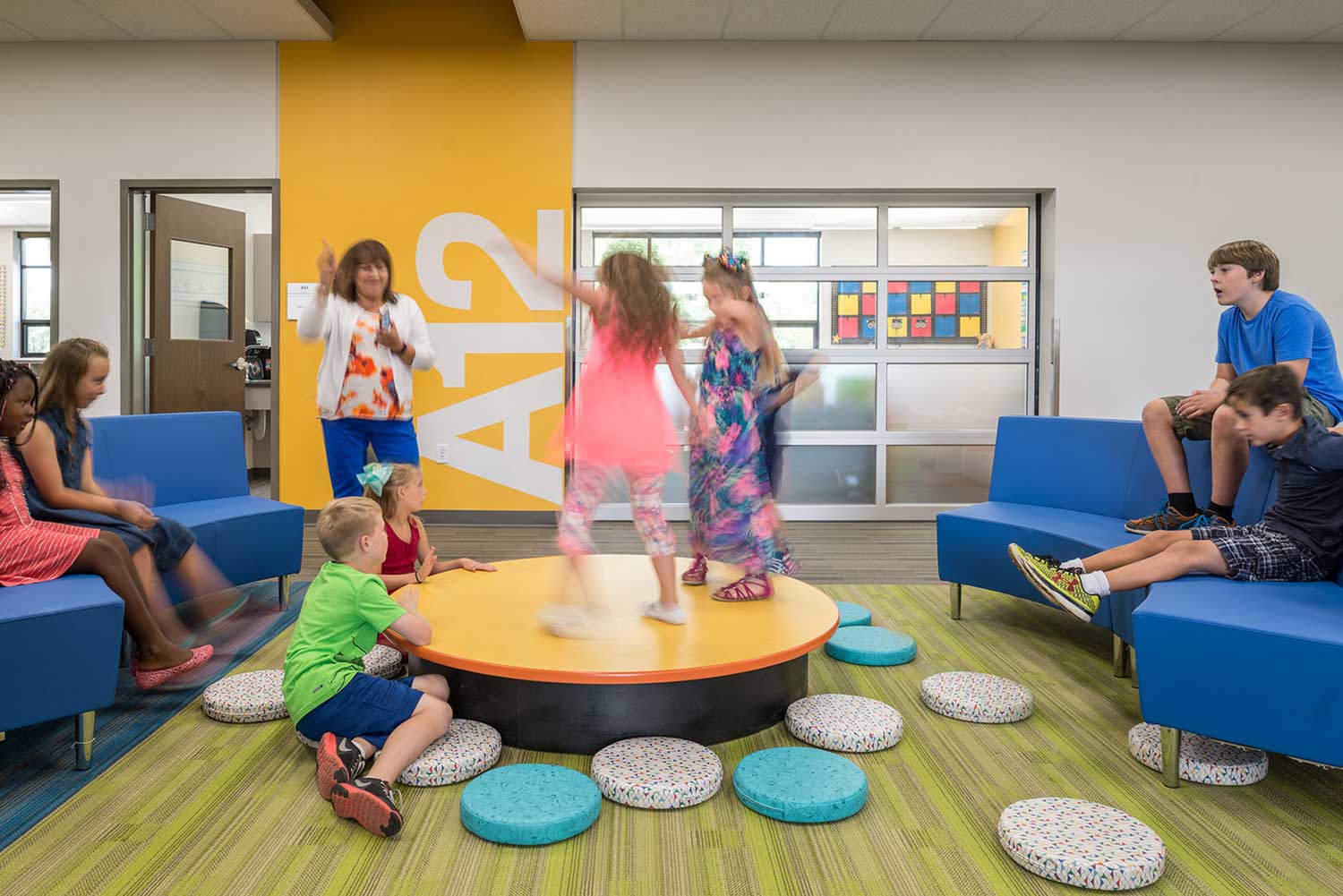
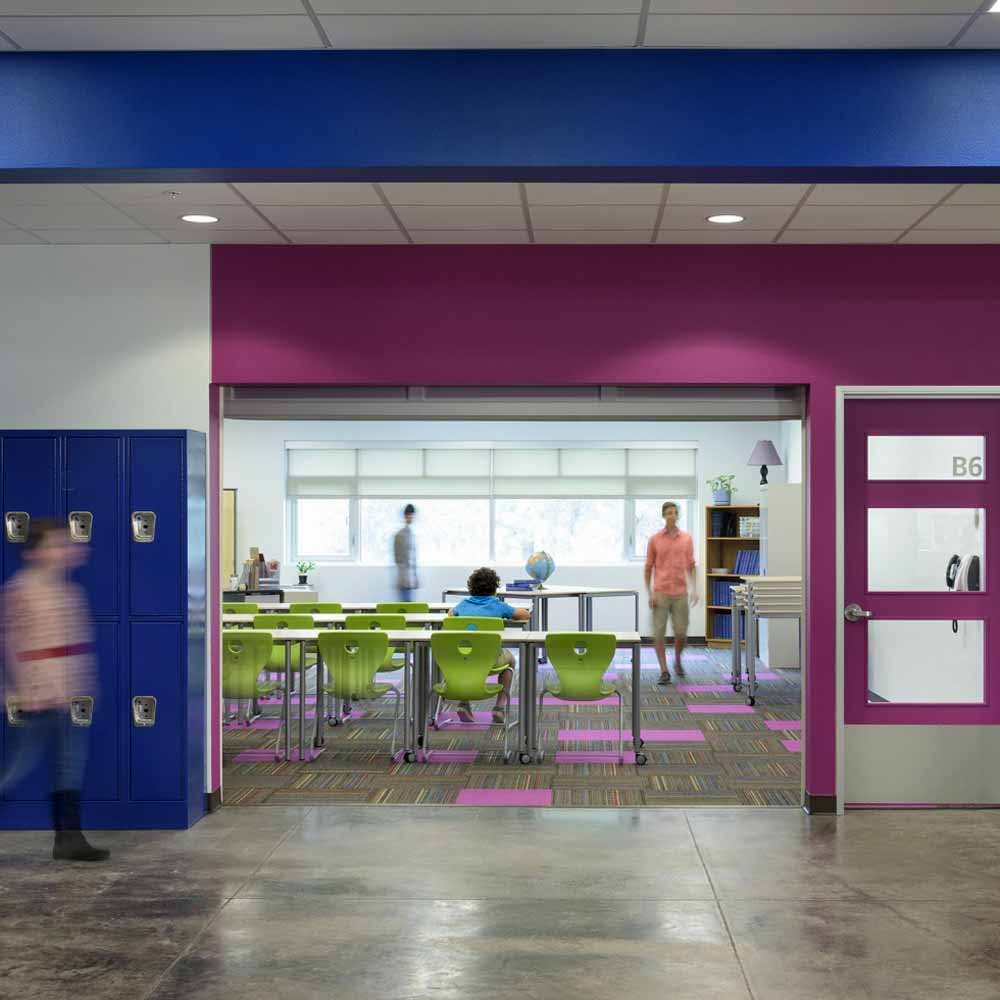
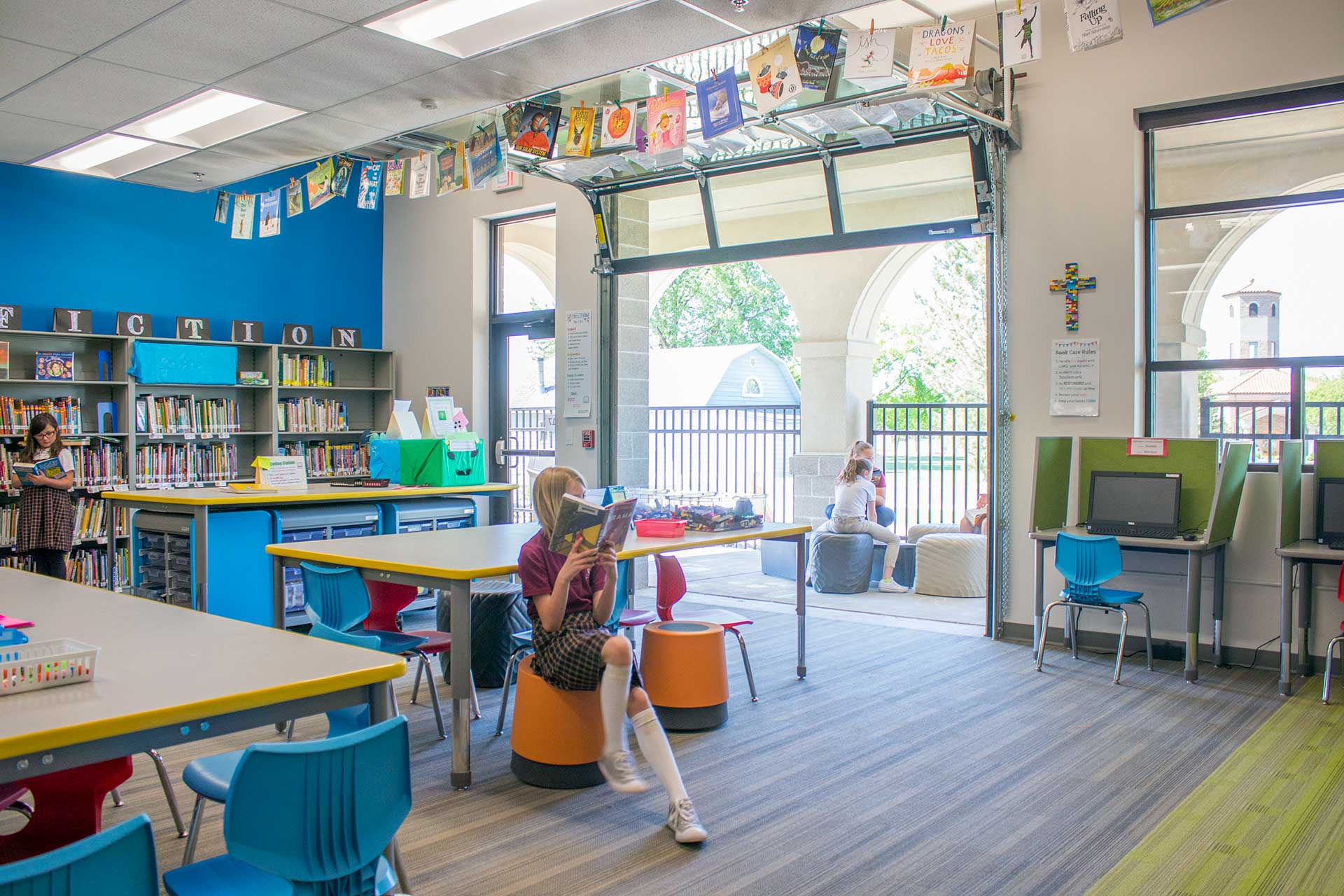
Design solutions for academic libraries must balance the need for social spaces with the need for quiet, focused study. Ensuring a wide variety of spaces that are technology enriched and feature movable furniture and adjustable partitions, along with acoustic design solutions, create multi-functionality.
Above all, academic libraries should support a feeling of belonging for students and be places where they feel welcome and comfortable. We design library environments that are custom suited to be age appropriate, reflective of the users and what’s important to them, and that spark creativity and learning through inspiring interior elements.

Bringing you the best in:
We have a proven track record of gaining trust and opening award-winning facilities to positive public opinion. We tailor our public and stakeholder engagement process to each community by utilizing surveys, project websites, engagement sessions, and open houses to ensure all voices are heard, from students and staff to families and business partners.
Strong community support and partnerships add depth and resiliency to a library’s programming, ensuring your vision for a long-term asset is realized. Our firm’s holistic approach weaves together creative partnerships with businesses, nonprofits, and cultural groups into the plans for your community spaces.


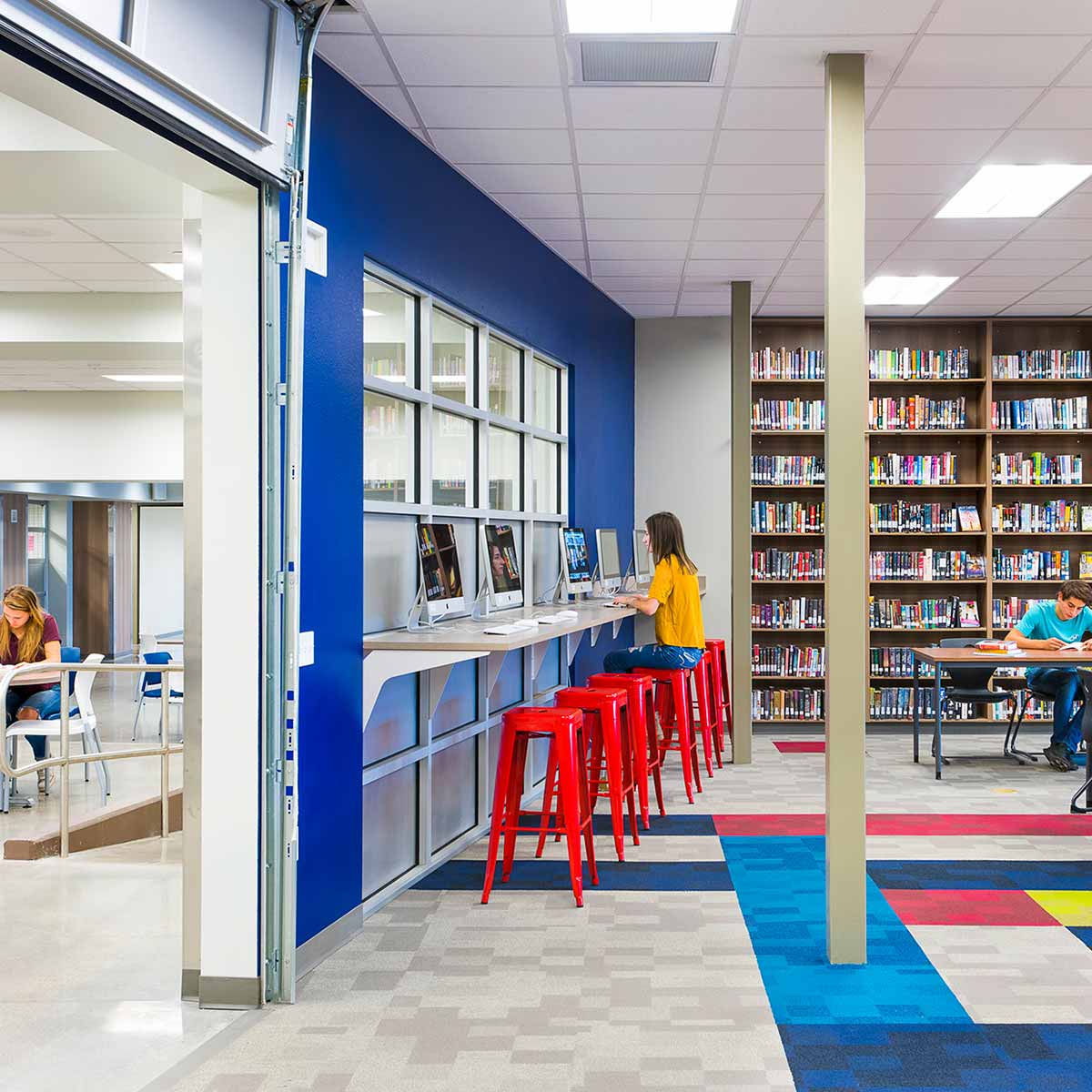
Many individuals use libraries as a primary place to access technological resources. So, it’s top of mind for us to optimize the staff and patron experience with built-in, state-of-the art technology solutions wherever possible. Computer banks or individual computer rooms that can be accessed in different locations, depending on the need, are critical to helping people do school work, pay bills, research or interview for a job, do their taxes, or a variety of other tasks.
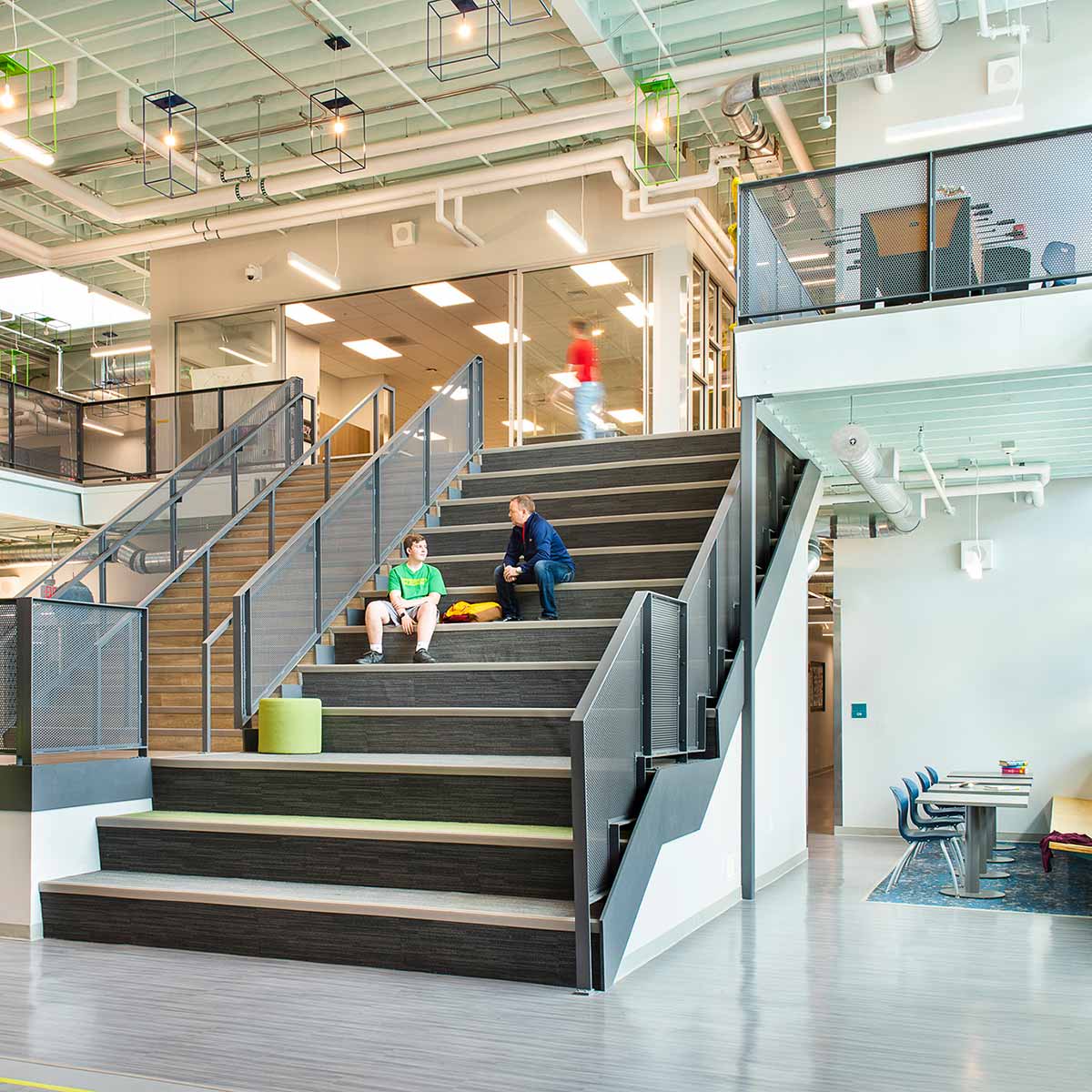
Libraries serve as a community resource. Beyond a place to read and check out books, today’s libraries are coworking spaces, places to hold community meetings or workshops, art galleries, and more. Depending upon your vision for your library, we employ thoughtful space planning to ensure space adjacencies can support the required functions and that flexibility is woven throughout.
Well-designed indoor spaces are critical to ensuring the health and wellness of the people within those spaces. Cushing Terrell’s design teams have specialized knowledge and experience to enhance the ecosystem of interior environments to create spaces where people feel good.
By designing for the user experience, your interior building ecosystem will thrive. With thoughtful design, careful material selections, health-promoting systems, and the integration of biophilic elements, we can design for health and wellness with targeted services that address acoustics, comfort, daylighting, inclusion and cohesion, indoor air quality, safety, and water quality.

Need help identifying and exploring creative funding options for your library project? We have experience calculating and revising necessary budgets depending upon your priorities, researching grants and donors, and building fundraising into the overall project process. We’ll guide you through each step so you can determine the ideal solution for your project and your budget.
We’ll work with you to understand what it takes to seek grants, work with public-private partnerships, align with stakeholders for a unified vision, and provide inspiring visual collateral if it comes time to approach donors or support capital campaigns.

Project Feature: Bigfork Library
How a small community library is making a big impact on the global stage.
A renovated 6,000 sq. ft. church hall is home to the Bigfork Library in Bigfork, Montana. Designed as a place of exploration and discovery for people of all ages., the vision for the project acknowledged that, in many ways, libraries serve as a bridge in their communities — a bridge between people, generations, technology, and learning. This bridge metaphor was important in creating a strong sense of place for the community of Bigfork, which is located next to Flathead Lake and tucked into Bigfork Harbor with bridges that cross Swan River.
The design expresses the bridge metaphor through architectural forms that visually and functionally connect the spaces throughout the building. For example, the team designed wood-beam elements that span the volume of the large, open ceiling space. These include a bridge-like feature that connects front and back entrances. From the front entrance, there is visibility through to the back of the building, inspiring curiosity and drawing people into the space.
Understanding that a 21st century library is much more than books, the space is fully equipped and enabled from a technology perspective. Given that the floor of the building is a solid concrete slab, the design team thought to utilize the hollow wood beams that hold up the bridge element to run power throughout the space. This solution was not only cost effective, but also functional and aesthetically pleasing, tying into the overall theme of the project.
Modern forms and materials serve as a backdrop for discovery both inside and outside the building with a variety of environments to explore. Shapes inside mimic rivers, trees, and mountains. For example, the team designed elements that create dappled light and shadows (much like in a forest) with clerestory windows that direct light through wood-slat elements and shape cutouts in the children’s area. A suspended mobile mimics the shapes sunlight makes when dappled on water, evoking the form of a river crossing through the ceiling plane.


The exterior design is minimal and modern and includes a wood-slat rain screen on the front and back faces of the building. The concrete entrance and exit forms act as “buttresses” to the interior bridge element. The rear of the building features landscaping that utilizes the existing grade to provide an outdoor area for small events.
With the client’s support and blessing, the design team utilized the Bigfork Library as Design for Freedom pilot project — one of only 12 projects worldwide. In partnership with Grace Farms Foundation, Design for Freedom pilot projects are helping to accelerate the movement to end forced/slave labor in the building materials supply chain by modeling transparent, forced-labor-free materials selection through rigorous research and demonstrating ethical design principles by creating examples of a more humane built environment.
Being a part of the Design for Freedom pilot project goes hand in hand with what we are creating with ImagineIF Bigfork — a place to explore the world through story and connection and challenge our ideas of what is possible. This project will open the eyes of our community to new processes, thoughtful design, and human dignity.
Sara Busse
Executive Director
ImagineIF Library Foundation
You’re in good hands.
Meet our library design leads.

Randi Thomas
Randi is an associate and interior designer with 15 years of experience supporting clients across a variety of markets. Her primary expertise lies in education projects and the design of experiential learning environments. She supports projects through all phases, leading concept creation, space planning, interior detailing, and material selections. She believes user engagement early in the design process is the foundation for every successful project. Randi is an Accredited Learning Environment Planner, a LEED Accredited Professional, and a WELL Accredited Professional.

Maggie Hardt
Maggie is an associate and interior designer with 11 years of experience. She has a passion for functional design that involves smart space planning, visual communication, and tailored solutions for her clients. With experience across a variety of projects, including educational environments, workplaces, and commercial facilities, Maggie is dedicated to integrating sustainability and artful thinking into her designs. She aims to foster a meaningful connection between end users and their environments, thereby enhancing both the functionality and experience within the spaces she creates.

Jessica Murray
Jessica is an interior designer with 13 years of experience contributing to responsible, sustainable design projects and working with humanitarian aid organizations. Her empathetic worldview has led to her work on projects such as the Bigfork Library, a Design for Freedom pilot project, which is a program aimed at modeling ethical material supply chains. Jessica prioritizes human-centered design in all facets of her work, from the client experience to the user experience, and she enjoys coordinating across design disciplines to realize holistic environments.