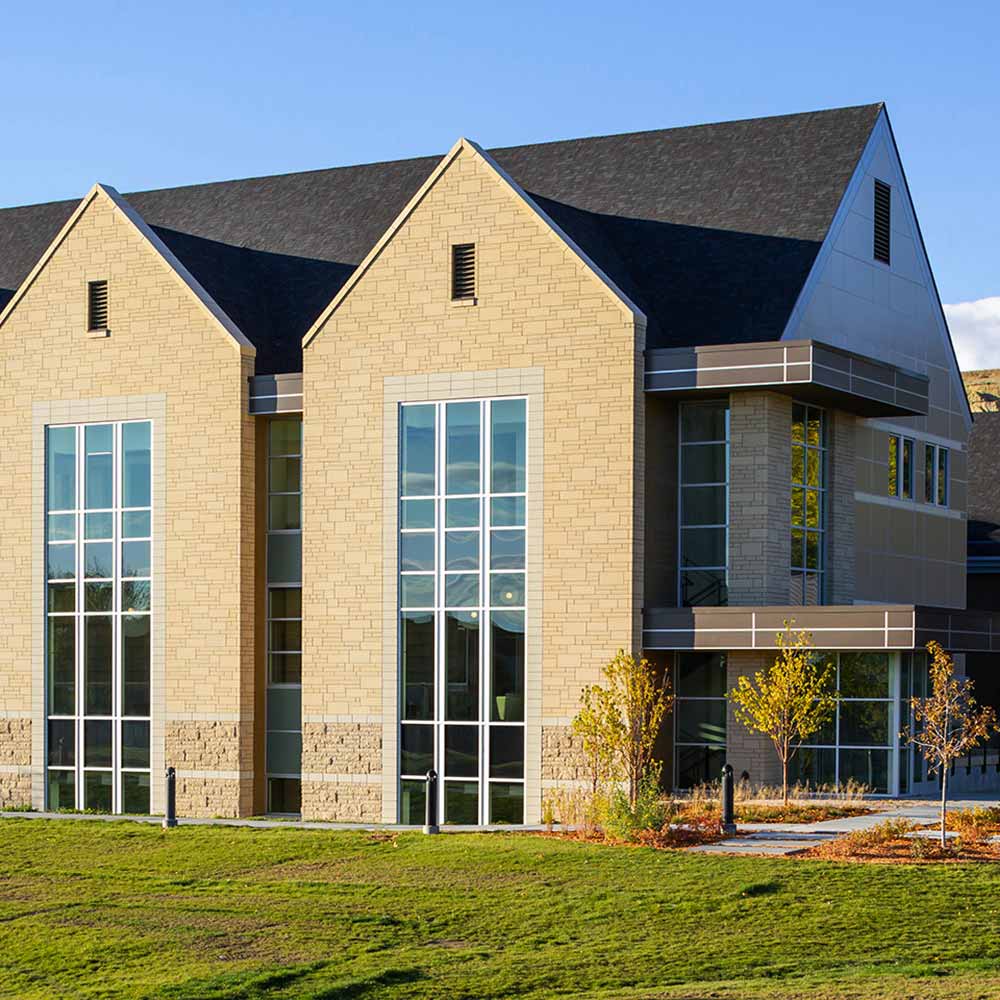
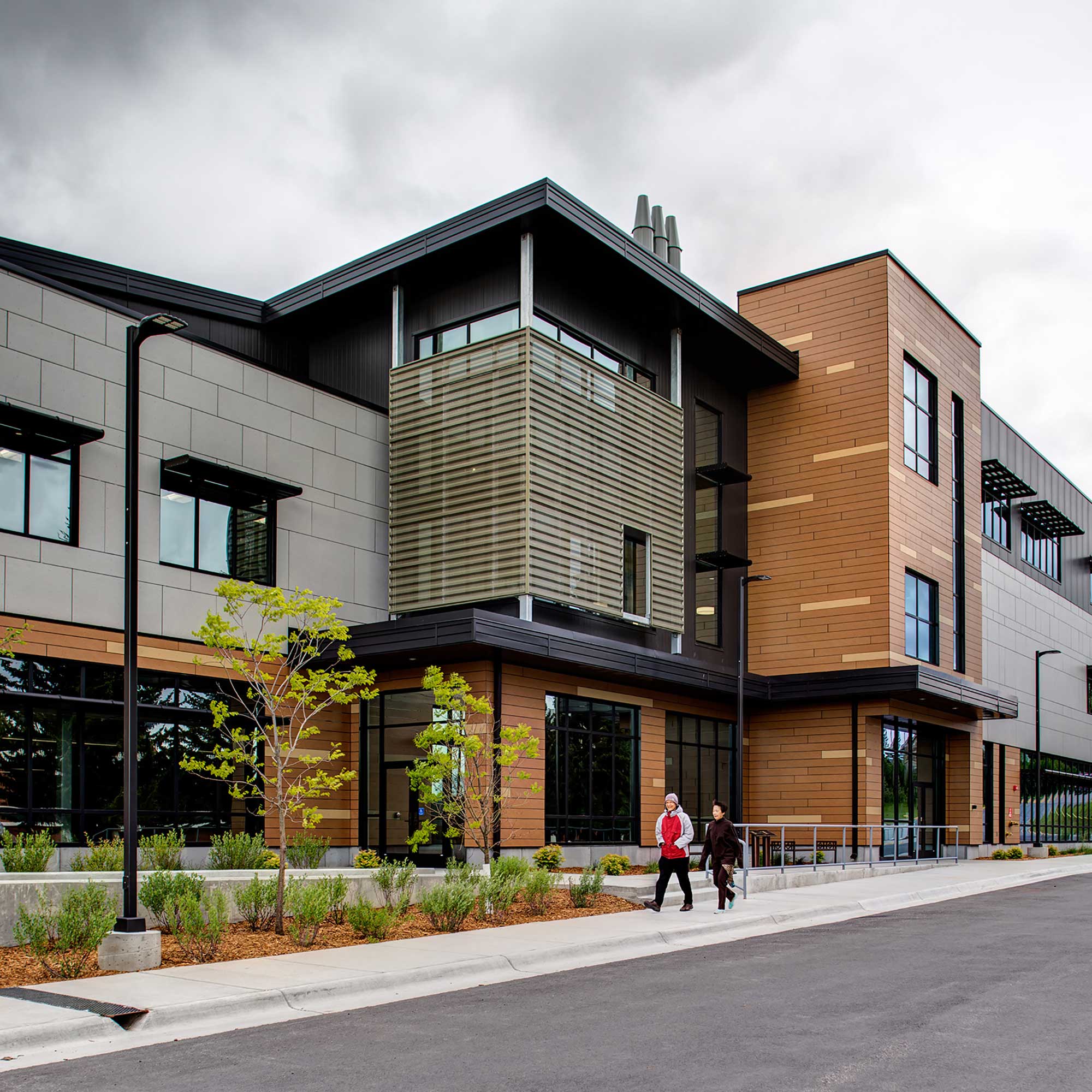
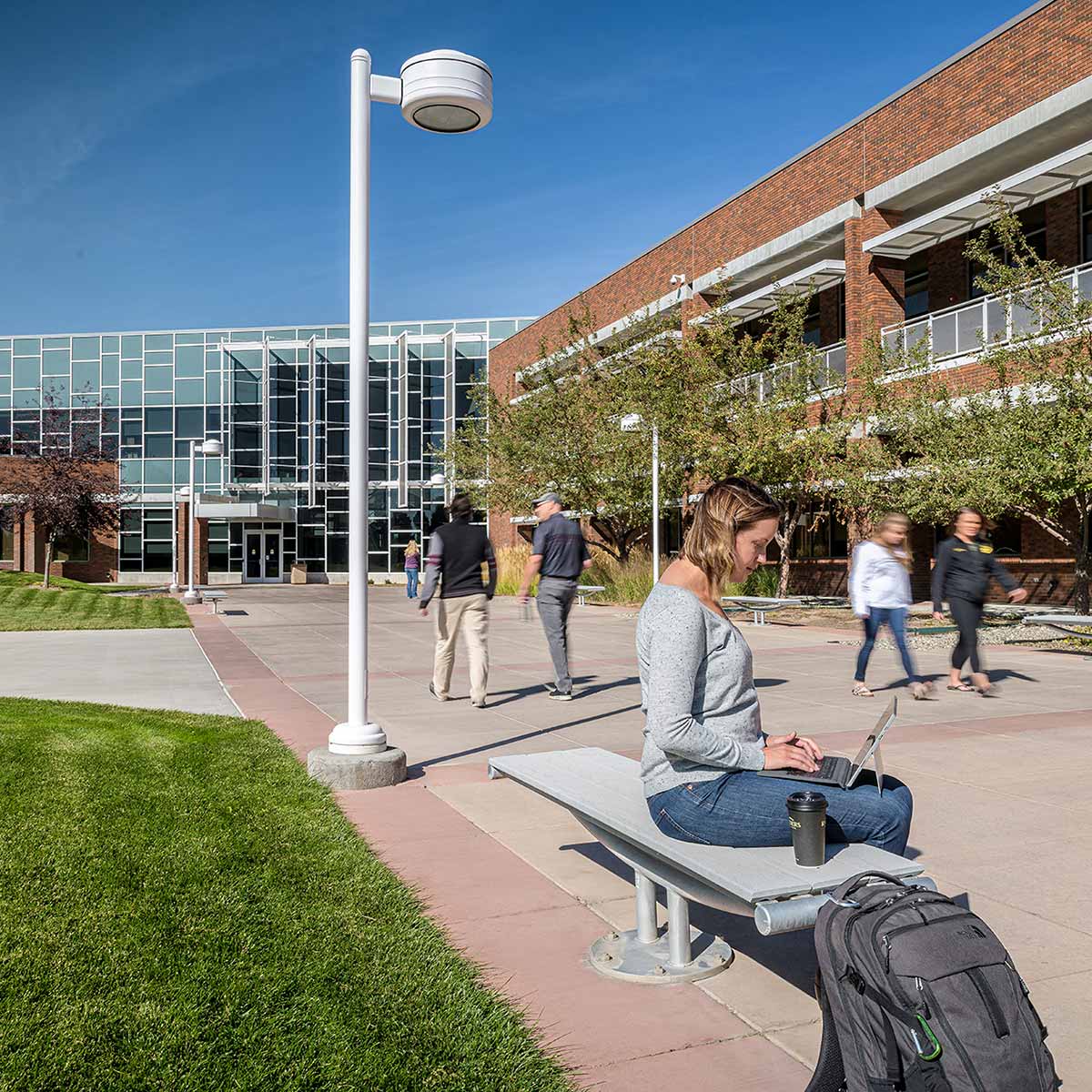
Hands-On Learning for Future Success
Educational environments that offer a strong return on investment in terms of supporting the acquisition of skills and training students need to succeed in the real-world workforce are in high demand. As schools, colleges, and universities expand and modernize, our education design team has in-depth expertise to help you accommodate evolving teaching, learning, and workforce priorities.
Design for Enriched Environments
When it comes to preparing students for a rewarding and successful career, our goal is to partner with clients to support a hands-on approach where students learn by doing in environments designed to facilitate this goal.
Our team approaches the design of these environments with a focus on research and collaboration. We work with administrations, school district leadership, municipalities, and local industries to prioritize a specialized plan that encompasses state-of-the-art technologies, career proficiencies, workforce drivers, and necessary flexibilities within learning environments.
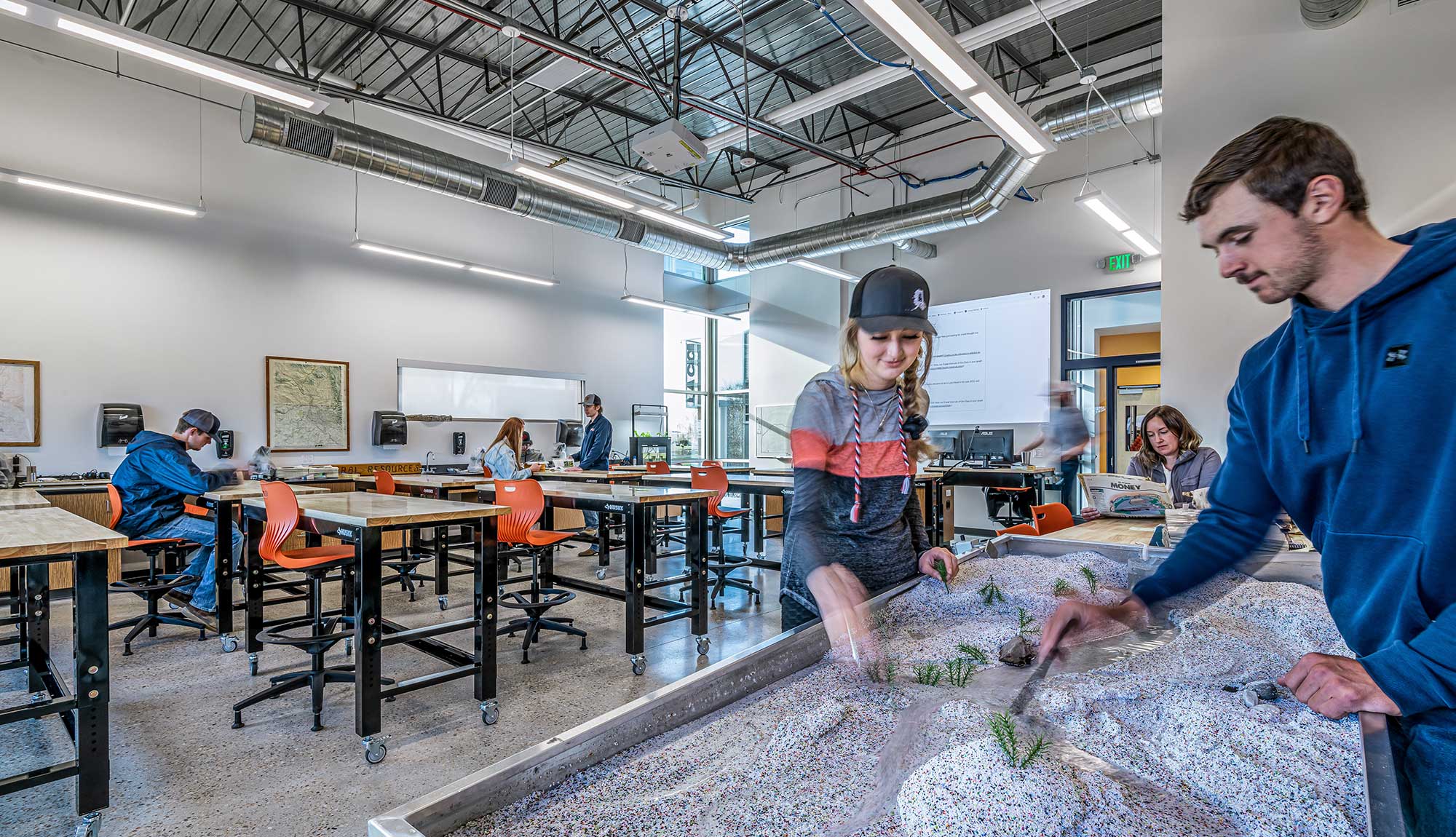
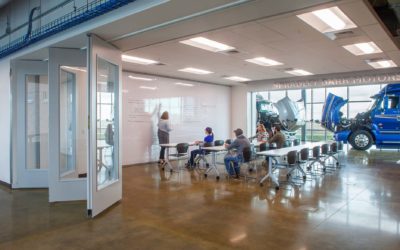
What exactly does this look like? With experiential learning, we’re not designing your average classroom. Designs are student-centered, technology-enriched, and include active labs, workshops, project and demonstration areas, and hands-on places for fabrication, experimentation, and research and development.


Our Tenets for Immersive Education Design
Relevance: Centers, buildings, complexes, and campuses are engaging and relevant to all students.
Resilience: Learning environments are flexible, 100% utilized (often via multifunctionality), and easily adapted.
Skills + Academics: Spaces are accessible, visible, and interwoven with an academic core.
User Experience: Health and safety are interwoven into every space and system.
Partnerships: Spaces encourage community, business, and industry partnerships.
Bringing you the best in:
A key aspect of our design strategy is creating learning environments with longevity and adaptability at the forefront of planning and programming.
Whether related to technology, student population growth, program expansion, building or room utilization, or a variety of other factors, we have the expertise to develop design solutions that account for a changing learning landscape and ensure your facilities are designed for today and for the future.
Need advice on whether to renovate, expand, or develop new buildings? Our team has helped clients across the education spectrum determine what is best for their particular needs and budgets so that space, resources, and dollars are utilized for the optimum return on investment.


We know there isn’t one catch-all learning style. Students and staff have different needs and methods of learning, study, and teaching. As such, it’s our job to create spaces and buildings that are capable of transformation, depending on the format of the course and alternative ways to introduce students to new information. Any time we can create a classroom, building, or set of buildings that incorporate features that support flexibility and adaptability, we’re creating a wider range of options for the user base.
When it comes to learning, the capability to welcome business, industry, and community partnerships is also key. Thoughtfully designed collaboration and community areas support important connections that students can carry with them through their education and into the workforce.
Hands-on, high-tech simulation labs and learning spaces are key for successful real-life learning opportunities. Modern health sciences, agricultural and horticultural sciences, automated systems, welding, and fabrication programs, are just a few that require specific learning environments that provide students with the unique experience and skillsets that drive innovation and growth to fully prepare them for a career in a variety of industries.
These environments often involve specialized systems to ensure functionality, health, and safety, as well as the relevant spaces, tools, and technology to ensure students are confident when it comes to applying their skills after graduation.

Regardless of the curriculum, age of the student, or location of the school, the goal of education is to equip learners with the knowledge and skills needed to be successful in life. Whether focusing on a career path; attending a university, college, or trade school; enlisting in military service; or embarking upon any life adventure, we must ensure students can thrive, actively contributing to their own personal growth, cultivating growth in others, and improving the world around them.
In partnership with our clients and their unique vision for education, we aim to imagine all the possible ways students might prepare for their futures in order to design optimal environments in which to learn.


Project Feature: College of Western Idaho,
Agricultural Sciences Complex
Making the most of indoor and outdoor connections to support programs in horticulture and agriculture.
College of Western Idaho’s (CWI) Agricultural Sciences Complex is a 40-acre site dedicated to education and training in horticulture, landscape design, floral science, and animal science. Located on CWI’s campus in Nampa, Idaho, the site was planned and designed to support a variety of indoor and outdoor learning spaces and comprises an animal science barn, a horticulture greenhouse, a shop, a student-designed arboretum, and the Simplot Agriculture Building, which houses classrooms, labs, staff offices, and student study and gathering areas.
North of the main campus and separated by a canal, the Agricultural Sciences Complex site was previously used for agriculture, thus it was a perfect fit to house the different facilities and grounds students and staff need for hands-on learning and training.
Buildings were designed to accommodate versatility, not only to support student and program growth, but also to ensure access to the surrounding landscape. For example, classrooms feature partition walls that can be adjusted depending on event and capacity needs as well as glass overhead doors that open to outdoor learning spaces, effectively transforming the utility of the classrooms.
This site is part working farm, part classroom, and part food incubator, and our goal was to smooth any transitions inherent to these related functions. We wanted to ensure a clear feedback loop between instruction, research, practice, and partnering with industry. There’s a public-facing ‘farm store’ where students can sell products they produce and host farm-to-table events. It takes the curriculum out of the classroom and into the market, without leaving campus.
Charlie Deese
Education Design Director
Cushing Terrell


The transition from outside to inside was further considered with shower rooms and lockers where work boots and other outside-only tools can be stored. In a similar way, outdoor seating areas are situated around the building with covered areas for working and collaborating outdoors.
The Simplot Agriculture Building, which houses the primary indoor learning environments, was designed as two academic buildings connected by an open canopy roof structure that creates an outdoor seating and gathering space. The entrance of the building emulates garden walls that serve as a gateway to the agricultural experience. The entrance not only helps funnel people into the two buildings but also creates a natural flow to the outside worksites.
The building is dually purposed: On one hand, it meets the needs of students and staff with classrooms, labs, workstations, and flex spaces, and on the other, it was designed to welcome the public with the flexibility to hold events and seminars.
You’re in good hands.
Meet our education design leads.

Jim Beal
Jim is a principal, co-director of Cushing Terrell’s Education Design team, and director of the firm’s research and development efforts. Jim has a broad base of experience in planning and conceptual design for innovative, sustainable, student-centered learning environments. In addition to designing educational environments, Jim is passionate about championing knowledge sharing, high performance, and design excellence at a firm that values constant curiosity and continuous learning and improvement.

Corey Johnson
Corey is an associate principal and co-director of Cushing Terrell’s Education Design team. His 30+ years of experience as an architect and studio lead have solidified his passion for education design and his drive to explore, invent, and continuously learn from those he designs with and for — including each next generation. His goal is to create innovative, highly functional, collaboratively charged learning environments that are infused with technology and adaptability to meet future needs. Corey is an Accredited Learning Environment Planner and a LEED Accredited Professional.

Randi Thomas
Randi is an associate and interior designer with 15 years of experience supporting clients across a variety of markets. Her primary expertise lies in education projects and the design of experiential learning environments. She supports projects through all phases, leading concept creation, space planning, interior detailing, and material selections. She believes user engagement early in the design process is the foundation for every successful project. Randi is an Accredited Learning Environment Planner, a LEED Accredited Professional, and a WELL Accredited Professional.