
Guest:
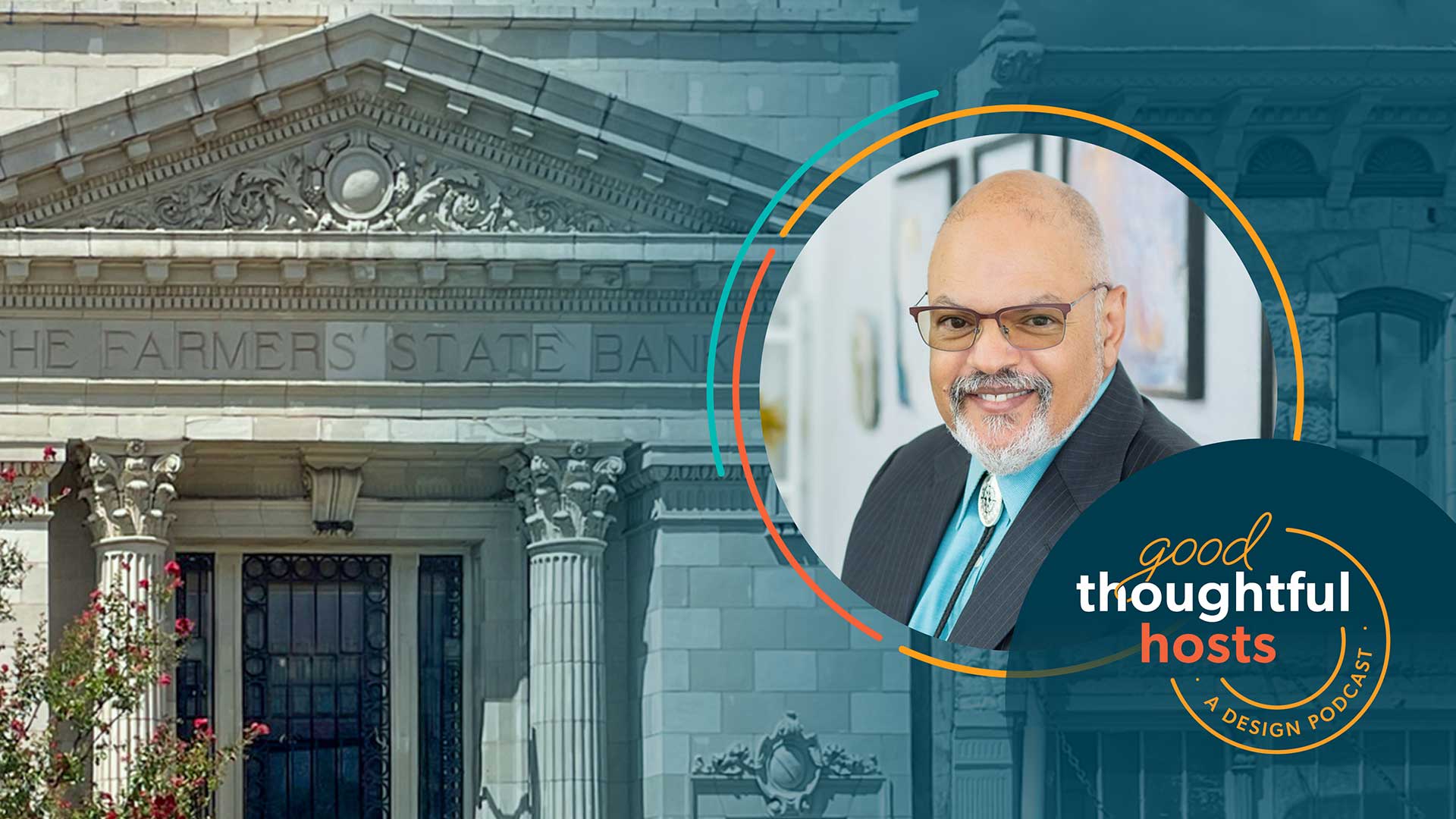
Murray Miller, Historic Preservation Manager, Cushing Terrell
Overview:
Why do we preserve historic places? How do we safeguard places for the benefit of present and future generations while managing change to those places? And how has the practice of historic preservation been challenged through the decades, especially now? We chat with Murray Miller, Historic Preservation Manager at Cushing Terrell, about how efforts to make historic preservation more relevant have also made the practice more inclusive, accountable, and transparent — and how proposed changes could significantly damage progress made since 1966.



Construction News and Review | Historic Preservation Matters That Can Impact Your Construction Project

Smithsonian Magazine | How Historic Preservation Shaped the Early United States

Advisory Council on Historic Preservation | Step-by-Step Primer on Section 106 Process
Episodes transcribed by AI and proofed for accuracy and spelling by our team.
Sarah Steimer 00:07
Welcome to our final episode of season four of Good, Thoughtful Hosts. I’m Sarah Steimer, and we’re wrapping up the season with a look at the past and the future, because today we are discussing historic preservation. I don’t want to drag out the intro because we have quite a bit to discuss today, but I do want to set the tone by giving you a little exercise. So, imagine you want to make the case to preserve a place that matters to you. Is it necessarily a building, or is it a street or an area? Do you want to preserve it because it’s architecturally significant, or because it played an important cultural role? And why is it important for future visitors to experience this place? And lastly, do you think the public’s voice, including your own, should count in deciding the fate of this location?
Producer 01:22
Today’s special guest:
Murray Miller 01:26
I am Murray Miller, Historic Preservation Manager for Cushing Terrell.
Sarah Steimer 01:32
Awesome, Murray. First of all, thank you so much for giving us some of your time today. I really appreciate it. Let’s start with learning a little bit about you before we learn about our big topic today, historic preservation. Give us your background. Tell us a little bit about yourself, if you would.
Murray Miller 01:48
Sure, my background is in architecture and planning and historic preservation. I have worked for the last 39 years in four countries at the local, state, and federal level, as well as in private practice, and have also taught at the University of Texas at Arlington at the School of Architecture. And so all of that time has been spent in historic preservation, historic architecture.
Sarah Steimer 02:20
That’s a pretty impressive resume. You are more than qualified to help us along in this conversation today, which I’m very excited about. So let’s set the table here. What is historic preservation? Because I think this is one of those things where maybe we think we know what it is, but you, as — I’m going to call you — our leading expert today, what is it?
Murray Miller 02:42
Historic preservation is often described as a conversation with our past about our future. It’s a way of engaging with history, not just to remember it, but to understand its relevance to present and future generations. Historically, its focus on architectural masterpieces, famous architects, and undeniably beautiful landmarks created a certain understanding of what historic preservation was, and even to this day, it is often perceived from a rather limited perspective. I’m always aiming to counter that perception by clarifying that historic preservation is not about freezing a place in time and restricting the most insignificant interventions. Rather, it’s about understanding the importance of a place and how we execute what is essentially the management of change. This means we need to ask, what is important in our history, and what parts of our past should we preserve for the future? Keeping in mind that most cities protect in the order of 5 to 7% of its building stock as historic, which is not a large amount by any means, but it’s often the part that generates the liveliest discussion.
Sarah Steimer 04:13
I really love what you said about it not being about freezing a place in time. You know, it sounds like the the definition that you’re giving us is more about having a conversation with the past today, or in the future, being able to have a conversation with the past, and I think that’s such an engaging way of looking at it. I’d love to talk a little bit about the history of historic preservation. So, if you would, could you talk to us a little bit about maybe some of the key moments, the key milestones that really served as catalysts for the preservation movement?
Murray Miller 04:53
I would say, certainly in in the United States, the historic preservation movement was sparked by 19th-century civic and patriotic events to save those beautiful national landmarks, and one of the earliest, most influential examples was the Mount Vernon Ladies Association of the Union. In 1859, this group successfully purchased and restored George Washington’s estate, that we know as Mount Vernon. The most defining early catalyst in England was the founding of the Society for the Protection of Ancient Buildings in 1877 by William Morris. It was here that Morris asserted any amount of art, style, or other interest in a historic building to which educated people would think it worth arguing at all is worth protecting. So when we think of what is worth arguing about at all, we can think of the great urban theorist Jane Jacobs, who in 1963 urged that the New York Landmarks Preservation Commission landmark all of Greenwich Village, all the way to the Hudson River waterfront, and she argued that these structures embodied the historic qualities of the neighborhood, and that their loss would erase a tangible link to the community’s past. The movement’s momentum grew in the 1920s and 30s as the automobile transformed the American landscape and threatened historic landscapes with demolition. The movement’s true national expansion came in the 1960s, when post-World War II urban renewal policies threatened to erase entire neighborhoods. This destruction galvanized public support, leading to the National Historic Preservation Act of 1966, which formalized preservation as a national policy.
Sarah Steimer 07:15
And now I know that there is a particular project that happened around this time. Could you talk to us just briefly, because I think this is definitely a point of interest, probably for many people, how did Penn Station play a role in this? How was it a bit of a martyr in this movement, as I understand it?
Murray Miller 07:35
Yes, the razing of Penn Station became a potent symbol of loss for Americans across the country, and it was thought that if such a beloved landmark could be erased solely in the name of profit, it seemed anything could go.
Sarah Steimer 07:55
I want to get a better idea of really, especially in your own words, when you’re perhaps making an argument yourself, what is the point of preservation to you? Why would we want to do this? Why would we want to take the time to stop maybe something else from being built or put a pin in something and go, we’re going to want to consider this in the future.
Murray Miller 08:19
Yes, one of the first classes that when I was teaching at UTA was about values, and then we went on to asking the question: Why preserve? Why do we do this? We preserve because it is essential to the identity and unique character of communities, and I’m particularly interested in character places that have special meaning, and places that are representative of the works of previous generations that have various types of values associated with it. We preserve because it’s essential to cultural, social, economic, and environmental sustainability. So another reason why we preserve is that historic places are key ingredients to neighborhood livability and quality of life. They create a sense of stability. There’s a certain quality and richness of design, construction, craftsmanship, and materials that we find in historic places. The other thing, given my architectural background and interest, historic places are adaptable to contemporary needs, and of incredible importance now, more so than even 20 or 30 years ago, it is the ultimate in recycling. Preserving historic places, it saves embodied energy. It decreases urban sprawl. And as we all know, there are places where the preserving of historic places relates to cultural and heritage tourism, which is a rapidly growing industry.
Sarah Steimer 10:18
I’m so glad you’re tying this into the conversation about, preservation doesn’t have to mean it’s not usable anymore. It doesn’t mean that we’re freezing these places in amber and not touching them ever again. So I’m so grateful that you brought that up. Now I want to, while we’re still talking about the whys, I’m curious to know, how does a historic place become significant? Because it’s, to me, it feels like it could definitely have so many different facets. Like it’s significant because it played a role in maybe getting elected, if we’re talking about very classical examples of American preservation. But talk to me a little bit more about why something becomes historically significant.
Murray Miller 11:08
Sure, and I’ll start by indicating that a lot of times I even hear folks suggest that the property is 50 years old, so therefore it is historic, right? Not so quickly. A property may be significant at the local, state, or federal level. In many instances, a property is locally significant and also listed on the National Register of Historic Places for its local significance. For example, to be considered sufficiently significant for listing in the National Register, a property must demonstrate significance in one or more areas, and it must retain integrity. There are four criteria that are considered in determining whether a property is eligible for listing in the National Register, and therefore has significance. Criterion A is when a place is associated with events that have made a significant contribution to the broad patterns of history. Criterion B is a place that is associated with the lives of persons significant in the past. Criterion C is where a property embodies the distinctive characteristics of a type, period, or method of construction, or it represents the work of a master, or it possesses high artistic value, or it may be a representation of a distinguishable entity whose components may lack individual distinction. So now we’re talking about historic districts or areas as opposed to individual buildings. And criterion D are properties that have yielded or may be likely to yield information important in prehistory or history, and this is often applied to archeological sites.
Sarah Steimer 13:26
So I want to bring our conversation up to today. My understanding from when you and I spoke previously is that there has been a shift in focus. So I want to talk a little bit more about where the movement is right now. You talked about the different reasons that you might landmark a a property, a space, etc. But what’s, where are we at this moment in time?
Murray Miller 13:53
I guess before we get to here today, I’ll make note that historic preservation has a long track record of being an architecturally focused, Eurocentric endeavor, largely identifying, protecting, celebrating, and benefiting a certain segment of society. All this with a narrow focus on protecting buildings as static works of art. Now, this represents a very limited cross section of what historic preservation is. Therefore, generating a condition that is often seen through a certain lens. In the last couple of decades, the National Trust for Historic Preservation has been reminding us of the need to broaden our consideration of what constitutes cultural heritage, and so by the 1990s, for example, it had launched several programs. That reflected a more diverse understanding of heritage, and this shift toward inclusivity became more explicit in the early 2000s when the trust began highlighting a wider range of cultural narratives and community voices. By the mid-2000s, the trust’s public messaging and programs reflected a commitment to preserving the full American story, moving beyond a narrow focus on elite or European influence heritage to include African American, indigenous, and other underrepresented cultural histories. So this shift takes us from static to living heritage, from exclusion to inclusion. Modern thinking embraces inclusive narratives, recognizing that heritage includes not just dominant cultural stories, but also the histories of indigenous peoples, immigrant communities, and underrepresented groups. The shift takes us from protection to revitalization, from preservation as cost to preservation as value, from top-down to a collaborative approach, and this shift toward living inclusive, economically viable, and community-driven preservation is where historic places are not just protected, but actively used, valued, and integrated into the present and future of communities.
Sarah Steimer 16:51
I would love to know if you could give us some examples of maybe this broader scope or this new scope, whether it’s unique in the different cultures — so it’s not so much this Eurocentric approach — or it’s unique because of the types of place that might, or types of places that might be preserved. You mentioned not just buildings; that it could be sections of a town or what have you. Give us some examples of this new approach, if you would.
Murray Miller 17:29
Sure. And one of the things that I was reminded of when I was looking for some recent examples is just to note that Cushing Terrell’s diversity, equity, inclusion, and belonging statement reflects this broader preservation or broader perspective of inclusiveness and celebrating our unique differences. So, a couple of projects that we’ve worked on includes the Little Africa Plaza in Saint Paul, which consisted of an urban revitalization effort to enhance the budding African cultural district in Saint Paul, and supporting ethnic retail entrepreneurs, along with space for the Economic Development Solutions Group. This is all taking place in a previously vacant 1926 Art Deco commercial building. So we’re talking now adaptive use or rehabilitation that has a cultural ethnic lens to it that reflects that broader reach to underserved communities. Another example is the Freedmen’s Town shotgun houses in Houston. Three houses in one of Houston’s most important African American historic communities are now part of a development that will include the rehabilitation of the popular house form, with its origins in Louisiana, and with so much of the historic district eradicated by demolition efforts, this initiative seeks to stitch back an important element of an underserved community that’s often displaced by exclusionary policies.
Sarah Steimer 19:29
I really appreciate the phrase that you just used. This idea of stitching back in and being able to wind this back into basically the cultural quilt of a place. I think that’s such a beautiful way to put it. I want to continue to talk about the now, of course, and I think it would be hard to have a conversation today about historic preservation without talking about some proposed changes that have been made to Section 106 of the National Historic Preservation Act. So, if you would, Murray, would you walk us through what is being proposed and what the ramifications would be?
Murray Miller 20:13
Sure. The proposed Section 106 revisions would significantly shift the balance of historic preservation review by centralizing authority within federal agencies, reducing consultation obligations, narrowing what qualifies for review, and limiting public and tribal participation. These changes represent a fundamental departure from the collaborative framework that has guided historic preservation decision making for six decades. So, some of the major changes include replacing the current process. There is a step-by-step process in the Section 106 review. The existing multi-step consultation framework would be replaced. The Section 106 report would be prepared by the lead federal agency, and that report would be certified solely by the federal agencies, and the agency could omit considerations that they deem comparatively unimportant or frivolous. There would be an increased federal agency authority, so agencies would gain unilateral authority to alter regulation deadlines. Consultation would no longer be required at key stages. Instead, agencies would evaluate comments and then decide whether to engage further. The traditional avoid, minimize, and mitigate standard would be replaced with a weaker directive to address adverse effects, rather than avoid or minimize adverse effects. There are changes, proposed changes, affecting tribal nations and preservation stakeholders. Tribal nations, there would be a reasonable opportunity to participate currently, but that would be removed, so it becomes optional, and also the timeframes would be narrowed under the proposed adjustments. There are potential impacts involving state and tribal historic preservation offices, as they would lose the ability to object to findings of no historic properties affected by the government’s undertaking. There is a proposed narrowing of definitions. So the definition of area of potential effects, for example, would be limited to direct material alterations, and this would eliminate the consideration of indirect effects. So, if something has a a visual impact effect, currently that is also an effect. The proposed changes would essentially say, if there’s not a physical effect, then there is no effect. Historic property would require a physical location, whereas now you can identify properties in other means other than a physical location or address. One of the important aspects is the impacts on public participation.
Sarah Steimer 24:03
Oh, so really citizen input or impact?
Murray Miller 24:07
The Section 106 process, which grew out of the loss of Penn Station, was largely because there was a public outcry and a demand that the public have an opportunity to weigh in on historic places that were in the public interest, and so what is proposed now is that public input would shift from a mandatory component to something within the federal agency’s exclusive discretion. Now, how this might affect historic preservation and other aspects, if adopted, these changes, which are inconsistent with the very purpose of the National Historic Preservation Act, would have far-reaching adverse effects on the practice of historic preservation as we have known it since public sentiment followed rampant destruction of historic places by federal agencies in the post-World War II period up to the 1960s. The National Historic Preservation Act was created in response to rampant destruction of historic places by the federal government. So, if these changes were adopted, reporting that is certified solely by the agency would reflect a no checks and balances process. Agencies could omit considerations they deem unimportant, and that could mean that transparency is optional. The proposed changes elevate the potential to adversely impact a broad range of America as we know it. It’s not just about historic buildings, but this gets to the identity and unique character of our community. This will impact the cultural, social, and economic and environmental sustainability objectives. It will affect neighborhood livability and quality of life, and the very things that we value would be at risk.
Sarah Steimer 26:24
It just sounds wild to see that this is the place that we could potentially get to after all of the hard work that came from the public sector, private, etc. to make changes to how we do preserve things that we, meaning the the nation at large, or individuals or groups of individuals deem important and culturally significant. Well, Murray, this has been an incredibly eye-opening conversation. But I wanted to-I wanted to know: was there anything that maybe we didn’t touch on that you wanted to mention, or anything you hope that people really come away from this conversation with?
Murray Miller 27:19
There are a few things, and I want to first mention that we started this discussion in relation to what historic preservation is and what the major catalysts were that established the preservation movement here in the United States as well as internationally. And what started the movement everywhere was some form of concern for the unnecessary destruction of cultural heritage, largely as a result of human-induced activities. There’s a long history of human-induced threat to historic places. We can start with the effects of war and political regimes, Nazi Germany, Soviet Union, and we still witness these tragedies today. There are constant economic pressures and the incredibly devastating urban renewal projects of the 1960s and 1970s, and we see the evidence of this impact even today, there’s pollution, overpopulation, and neglect that have produced a great deal of destructive forces on historic places, and we still see this today. There’s cultural erasure through ideology, the notion that one’s culture is not that important, and whether through deliberate attempts to erase history, through acts of war, or whether through our own ignorance and malice, attempts to erase or rewrite history is a very destructive force, not just for historic places, but for community identity and a sense of belonging, and yes, there is evidence of such human-induced threats that are leaving their mark even today. And perhaps even more consequential is decision making, whether that be property owners’ decisions, policies and priorities, uninformed decisions related to the here and now, without regard to previous or future generations, and yes, decisions about funding cultural heritage in in terms of what I’d say are contemporary threats.
Sarah Steimer 29:39
Can you give us some examples of those threats?
Murray Miller 29:42
While we can cite war, economic pressures, overpopulation, neglect, efforts at cultural erasure, we can also prominently cite decision making, especially when it comes to funding historic places, which have long been an aspect of our existence that is in the public interest. This is not just an American issue alone. In Canada, for example, the federal pilot program for heritage building tax credit was discontinued in 2018 when the government of Canada ended the temporary measure that had been in place since 2013. Now, this was a program that was advocated for decades, and the United States federal rehabilitation tax credit program was often cited as an example, that had demonstrated for every dollar of public funds invested in historic properties, another $9 was invested by the private sector. It has consistently been one of the most fiscally responsible federal programs, with broad consequential benefits to American history and culture as a whole. So there’s a growing tension everywhere between the stated value of heritage and the policy choices that determine whether it survives.
Sarah Steimer 31:12
What else might be affected?
Murray Miller 31:14
When funding is removed from heritage institutions, the impact is not limited to exhibitions or programming. What disappears is capacity: the ability to tell stories, attract visitors, support tourism, and generate self-sustaining revenue. When that capacity is routed, communities lose more than cultural memory; they lose part of the infrastructure that sustains local economies, but when we cut heritage funding, we cut economic development. And in relation to threats that were not as pressing a half century ago, we cannot underestimate the threat of climate change and the potential impacts of new policies and priorities related to the need for affordable housing. These matters are of profound impact on society as a whole, and they are inextricably linked to the broader practice of historic preservation. So, what does this all mean? It means we have come almost full circle with the need to safeguard our cultural heritage from the very entities that were established to protect historic places over the last 60 years. This comes with the stewardship obligation to protect historic places, invest in historic places as part of any economic development, affordable housing, or climate action strategy. As a society, we need to be honest about American values and appreciate that we are stewards with a responsibility to instructively hand down a cultural heritage to future generations. And finally, historic preservation practice must evolve to reflect the character of a country with heritage so rich. And I’m reminded that we are stewards of this richness, and it is imperative that we tell the full American story, even the parts we may not like.
Sarah Steimer 33:31
That’s so beautifully put, and you’re giving me such a new lens to be able to look at these spaces through and appreciate them in whole new ways. If nothing else, I certainly think I’ll be finding myself pausing longer when I am in these spaces and learning about where more exist around me and in places that I visit. And I do have just one more question for you, Murray. I don’t know if you can even answer this, but I’ll try to ask it anyhow. Do you have a favorite space that has been historically preserved?
Murray Miller 34:11
One of my favorite places is called the Shambles in England. It is a very rich and narrow street that is so unique that it just feels wonderful to walk through and listen to the sounds of the shopkeepers, and so it’s more than, it’s more than architecture. It’s something about the place that is very special.
Sarah Steimer 34:42
And listeners, if you do not know where this is, take a moment to do a quick Google Image search because wow, this is what an incredible space. I know I’ve seen photographs of this before, but I can’t. I feel like just looking at these photos, I can imagine sounds past and present. So, what a beautiful choice! Again, Murray, thank you so much for your time today. I so appreciate it.
Murray Miller 35:09
Thank you so much. I enjoyed it, and thank you so much for the opportunity to share certainly what I’m passionate about. And I would just like for folks to see the places that we value through a broader lens.
Producer 35:31
Music for Good, Thoughtful Hosts was written, produced, and performed by Sam Clapp. Our moderator is Sarah Steimer. Editing by Travis Estvold. And a special thank you to our content development team, Marni Moore and Trisha Miller. For more information about the podcast, visit thoughtfulhosts.com. Thanks for listening.