Education Planning for Every Situation and Scope
From long-range planning, pre-bond planning, and capital campaigns to site and facility assessments, programming, and space planning, we provide in-depth expertise in all types of education planning. Our process is an energizing, engaging, informative, and effective way to guide and unite education clients and their communities in a common mission to fuel the minds and develop the skills of each successive generation.

Providing a Holistic Approach for Your Planning Needs
We approach the planning and design of educational spaces from a research perspective, looking to the future, and thinking broadly and holistically about building-wide systems, space adjacencies, technology, flexibility, and community impacts. Our three-step process of assess, explore, and apply aides in this approach, providing an effective method to identify needs and develop solutions to meet those needs.
Assess: Working in partnership with our education clients, we first assess existing conditions, demographics, current educational practices, and desired future practices to understand and articulate an assessment of your facilities.
Explore: We then explore a range of planning and design options, each informed by the insights gained during the assessment phase of listening, data gathering, and analysis.
Apply: Once a preferred concept has emerged, we work to develop the scope, cost, and schedule in detail to ensure stakeholders have a clear understanding of what the plan entails and how it will benefit the educational community and the wider community.
Bringing You the Best in:
Instead of thinking in terms of developing a building or even a set of buildings, we start by thinking about purpose. The visioning phase of our creative process involves working with you to comprehensively document all the educational, environmental, and operational functions — the purposes — your facility should support.
Through this understanding, we work to size rooms appropriately, realize necessary adjacencies, discover possibilities for shared use, identify efficiencies through the flexibility of spaces, and apply intent to the finishes, furniture, fixtures, equipment, systems, and utilities within each space.
While thinking intentionally about each space, we must also think of long-term relevancy. If schools built today are expected to last a minimum of 50 years, we must consider the building’s ability to remain relevant, which is contingent upon its ability to adapt to a variety of functions and user groups.

Cushing Terrell’s education planning team has in-depth experience helping clients pass bonds and identify funding opportunities for their projects. This experience includes facilitating successful bond and capital campaigns for more than 40 school districts, colleges, and universities across the nation. Funding sources can come through many mechanisms including capitol campaigns, bonds, grants, utility incentives, and donors.
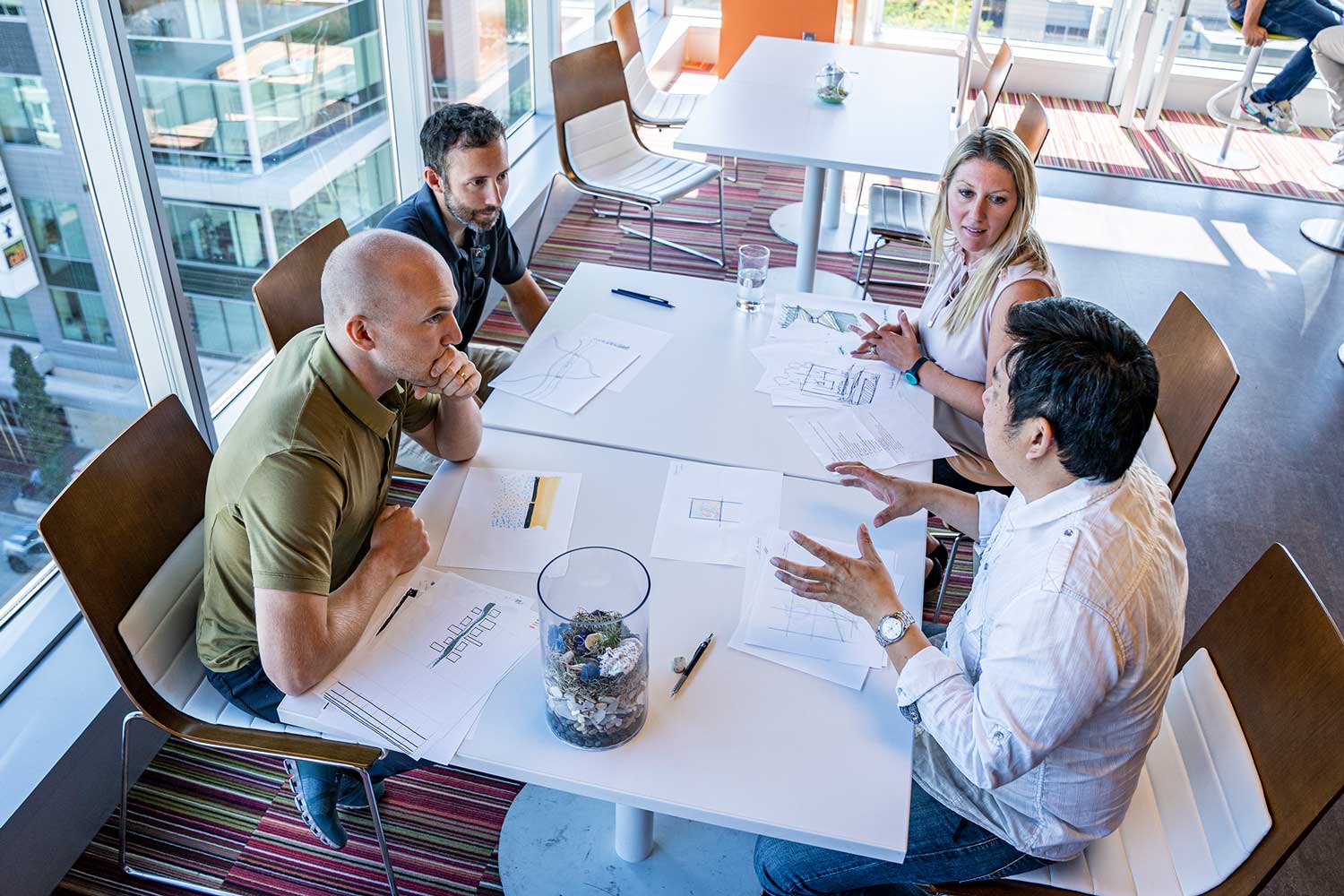
Thoughtful, strategic, and comprehensive community input and involvement is key to building support for bonds that will fund the transformation of teaching and learning environments. Through an interactive and inclusive stakeholder engagement process, we examine existing conditions, demographics, and current and desired educational practices to understand and articulate a common vision.
The following are the services we offer to help ensure the needs of your students, staff, and facilities are accurately represented, clearly communicated, and ultimately supported by your community.
- Establishing project costs and delivery schedules
- Establishing a bond planning committee and schedule
- Leading and developing presentations
- Facilitating meetings, community events, and surveys
- Digital and print media, graphics and branding

Education Planning and Thought Leadership




Project Feature: University of Denver,
Kennedy Mountain Campus
Creating a long-range plan for University of Denver’s satellite campus in the great outdoors.
Cushing Terrell worked with the University of Denver (DU) to develop a long-range plan for its Kennedy Mountain Campus (KMC), located two hours from DU’s urban campus in Denver, Colorado. Guiding principals for the project included:
A Synthesizing Experience. Offering an experience that contrasts with, but is complimentary to, what is offered at DU’s main campus. Using outdoor programming in a co-curricular manner, KMC will promote a lifelong mindset for wellness and help students explore values, virtues, and behaviors.
Curriculum and Research Enhancement. Enable faculty and staff to explore how the outdoors can enhance their work, particularly curriculum innovations and research activities. Class sessions, academic projects, environmental research, and retreats are just a few of the possibilities.
Alumni Engagement. Opportunities for alumni to experience KMC through activities such as reunions. These activities will be a key source of revenue to ensure student programing is supported in perpetuity.
Self-Supporting. Financially supported through philanthropy, revenue-generating activities, and fee-based use.
Expansively Inclusive. Offer experiences that create a sense of belonging by all from the DU community, regardless of abilities and identities.
Sustainable Conservation. A strong conservation ethic and commitment to be stewards of the land will center the project through the restoration of waterways, maximizing renewable energy, and minimizing the impact of development.
Intentional Minimalism. DU will maintain and develop the property with a minimalist, high-quality mindset, avoiding overdeveloping the property and only considering new construction after careful consideration of conservation and sustainability.
Cushing Terrell’s task was to determine the ways in which the built and natural environments could help bring about the university’s goals. Because it was important to offer a holistic experience, not solely academics, the team wanted to ensure the natural environment could be leveraged to enhance opportunities for personal reflection, challenge, and growth.

You’re in good hands.
Meet our education planning leads.

Charlie Deese
Charlie is a co-director of Cushing Terrell’s education design team. He is dedicated to delivering modern, functional, and inspiring learning environments for students, teachers, and all who have a role in educating the next generation. His main focus is on comprehensive planning projects where he leads stakeholder groups through a collaborative visioning, programming, and design process to identify and incorporate client and community goals into tailored solutions.

Mike Vermeeren
Mike is an architect and A4LE accredited Learning Environment Planner with two decades of experience in education design. With a background in planning and project management, he is the Education Studio Director for Cushing Terrell’s Austin office. He believes the path to successful design is infused with studious observation, introspective thought, listening, group collaboration, and a genuine appreciation for the team dynamic.

Beth Wilson
Beth is a K–12 facilities planning executive with more than 30 years of experience leading strategic planning, real estate strategy, and educational design that advances equity and instructional excellence. Known for her collaborative leadership and ability to translate instructional vision into innovative, student-centered environments, Beth’s experience spans school district planning, municipal policy, and architectural design.