Powering Learning Environments Through On-Site Solar Solutions
There’s no doubt educational institutions must fully capitalize on what are often tight budgets. Administrators need to make decisions that balance operational and educational goals, ensuring they’re able to support both high-performance buildings and high-quality education. But what if there was a way to simultaneously lower energy costs, enhance education, and be part of a more sustainable built environment?
One of the design solutions our team at Cushing Terrell has been helping implement for educational clients is on-site solar to offset energy costs and serve as a learning tool.
Making Solar Projects Feasible… with a Payback
From local city government and utility programs to state and federal programs, there are a variety of incentives, rebates, and tax credit options to explore when considering a solar project. Through nationwide initiatives such as the Inflation Reduction Act passed in 2022, schools became eligible for up to 30% reimbursement for the cost of solar panel installation. And even with recently passed federal legislation impacting eligibility for tax credits, we may see city and state governments stepping up to fill the gap when it comes to supporting renewable energy projects.
One example of a state-run effort is the $25 million grant program in Pennsylvania called the Solar for Schools program. Passed by the legislature in 2024 and accepting applications from November through January 2025, the grants will aid in the purchase and installation of equipment, permit fees, energy storage, and utility interconnection.
Schools may also be able to take advantage of local solar refunds and discounts put forth by utility companies. For example, depending on the state, educational institutions may qualify for one or more of the following solar discounts: tax credits, property tax exemptions, sales tax exemptions, solar rebates, low-interest loans, feed-in tariffs, and/or Solar Renewable Energy Certificates. Consumer Affairs, and many other publications, offer state-by-state breakdowns of potential solar discounts, refunds, and rebates.
According to the U.S. Department of Energy, K-12 schools alone are spending $8 billion per year nationwide on energy costs — the second largest expense for schools, after salaries. As a result, schools like the Arizona Unified School District have implemented a district-wide solar project that installed solar arrays on-site to power 21 buildings. They expect to save $14 million over 20 years, or $700,000 annually.
In the short term, depending on the scale of the project, institutions could save thousands, which could then be spent on critical educational programs, necessary building maintenance, expansions as populations increase, and essential supplies for students.
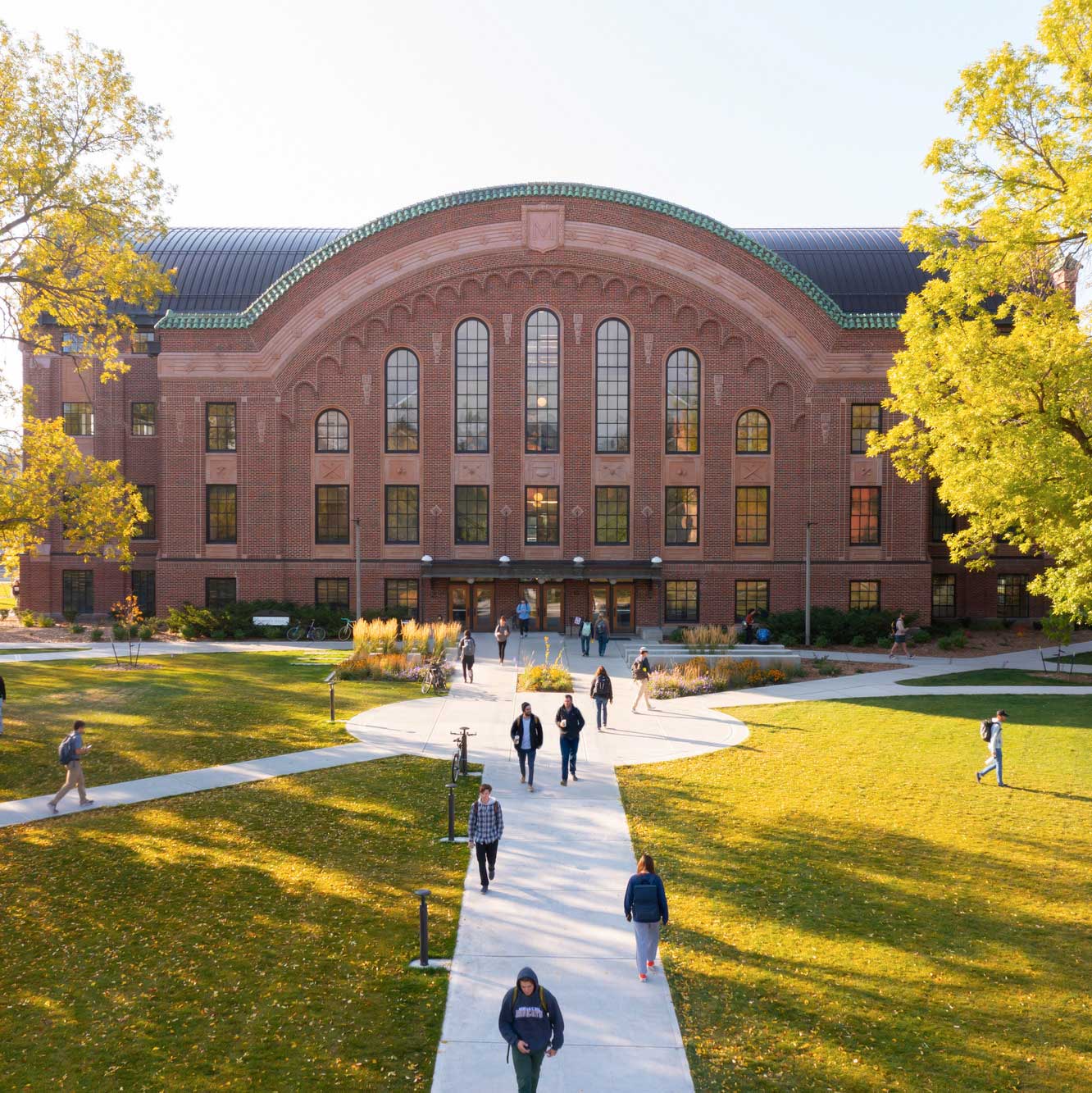
Romney Hall, Montana State University: Bozeman, Montana
Designing for a Bright Future in Higher Education
Montana State University (MSU) has long been a champion of sustainability, understanding the importance of continually improving the university’s environmental, social, and economic performance. Through MSU’s Office of Sustainability, formed in 2012, the university has led the installation and utilization of alternative energy systems, highly efficient LED lighting, water conservation systems, HVAC enhancements, and more. In water, lighting, and heating and cooling alone, they’re saving around $410,000 per year.
In 2023, MSU earned a prestigious STARS Gold rating from the Association for the Advancement of Sustainability in Higher Education — an honor that recognizes MSU’s comprehensive sustainability achievements.
As a design partner for MSU, Cushing Terrell has supported the university with many of its energy-related projects over the past decade, including the design of solar systems in buildings and planning for the installation of solar at a future date, making them “solar ready.”
The Cushing Terrell team has worked on an ongoing, campus-wide master plan to increase MSU’s overall energy efficiency via the design, construct, and maintenance buildings on campus to an exponential degree of sustainability. This effort will aid in the university’s goal of achieving STARS Platinum by 2035 and carbon neutrality by 2040.
For example, solar wall technology utilized for MSU’s Romney Hall improved the building’s energy performance by more than 40%. Designed into a new elevator core clad in dark-colored perforated metal panel, the system captures solar-heated air that is incorporated into the HVAC system and circulated via heat pumps throughout the building. The heat is transferred to and from the campus’ geothermal system, providing most of the heating for the building. The historic renovation of Romney Hall earned LEED Gold and is one of the projects that helped MSU earn its STARS Gold rating.
Additionally, Cushing Terrell partnered with CO Architects on five new nursing education facilities for MSU — all designed to be solar ready with the goal of LEED certification. Those buildings are currently taking shape in communities across Montana.
Through MSU’s Office of Sustainability, the university has led the installation and utilization of alternative energy systems, highly efficient LED lighting, water conservation systems, HVAC enhancements, and more. In water, lighting, and heating and cooling alone, they’re saving around $410,000 per year.

Montana State University, College of Nursing Project Rendering: Missoula, Montana
A Spotlight on “Solar Ready” Bozeman and Gallatin High Schools and the Billings School District
Other examples of schools that have implemented multi-phase solar programs — a good option when you need to meet budgets and align with current funding levels — are Bozeman High School and Gallatin High School in Bozeman, Montana.
When designing the brand-new Gallatin High School and the renovation for Bozeman High School, the Cushing Terrell team ensured the schools would be solar ready, meaning space, structures, and connections all in place for the future installation of photovoltaic (PV) arrays. Now, three years later, Cushing Terrell is helping the schools realize their solar dreams with the design and layout of these systems.
The 50kW systems are estimated to generate approximately 65,000 kilowatt hours per year, which is equivalent to the average consumption of six, single-family homes in the United States. The arrays will power shop equipment, lighting, cooling, and other general electrical loads.
Likewise, the Billings School District has followed this model, starting with high schools, then middle schools, and now moving on to elementary schools. Each location and potential future utility has been considered with arrays installed in fields, on rooftops, and space-efficient areas such as covered parking structures. The Billings School District utilized NorthWestern Energy’s grant program for their projects, and with the grant, the schools should see a payback at around 12-13 years.

Gallatin High School: Bozeman, Montana

Bozeman High School: Bozeman, Montana

Medicine Crow Middle School: Billings, Montana

Skyview High School: Billings, Montana
The 50kW systems are estimated to generate approximately 65,000 kilowatt hours per year, which is equivalent to the average consumption of six, single-family homes in the United States. The arrays will power shop equipment, lighting, cooling, and other general electrical loads.
Students Learn the Impact of Different Solar Power Systems
In partnership with Missoula County Public Schools, Cushing Terrell provided design services for a variety of array types for a program with NorthWestern Energy. The goals of the program were to provide an opportunity for students to learn about renewable energy and to give NorthWestern Energy the ability to see how different system designs can tie into the electric grid. The four PV arrays, one installed at each of the local high schools, feature designs adapted to their surroundings.
At Big Sky High School, the system consists of a PV array that covers a patio area as a source of shading and protection from the elements. This site has a planned battery energy storage system, which will make it possible to store excess energy generated from the array.
The Hellgate High School system design centered on the challenge of integrating solar into a densely populated urban setting. This array features PV panels installed on an 18-foot-high carport canopy, which kept the array out of the shadow of the adjacent buildings.
Sentinel High School’s array supports the study of different orientations and times of day that would create peak output. The various orientations allow NorthWestern Energy to evaluate the feasibility of offering incentives to customers to place arrays in directions other than the traditional southern orientation. The varied directional options could help create more evenly distributed solar energy throughout the day.
And finally, for the system at Willard Alternative High School, the team integrated PV panels vertically into a fence. This design helps increase solar production in high latitude climates that experience large amounts of snowfall and low sun angles during the winter.


Willard Alternative High School: Missoula, Montana
A Shining Example of Hands-On Learning for CTE Students
Treasure Valley Community College (TVCC) in Ontario, Oregon, also worked with Cushing Terrell for their Career and Technical Education Center, which is an immersive, hands-on learning environment focused on offering students the necessary skills to excel in the region’s high-demand industries such as agriculture, natural resources, automated systems, welding, and fabrication.
Cushing Terrell provided architecture, interior design, electrical, mechanical, and structural engineering services for the renovation and addition, including design of a PV array that provides the building with renewable energy and serves as a demonstration tool for educators and students.


Treasure Valley Community College: Ontario, Oregon
Highlighting the Importance of Environmental Readiness and Learning
What stands out in these examples is the beneficial partnerships that can develop between systems designers, educational organizations, and local utility companies.
Ultimately, solar energy systems are a smart way to meld real-world engineering solutions, enhance hands-on learning, and support the use of alternative energy, resulting in multifunctional, resilient spaces that both empower and inspire the next generation.